Fragments of Casa Covida
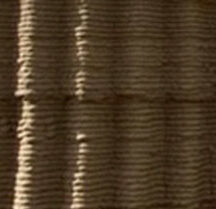
Fragments of Casa Covida began during my residency at the Adobe Archipelago in Colorado, around Ronald Rael and Virginia San Fratello’s earthen house Casa Covida. The house was printed by a machine in [2020], layer by layer, then handed over to the site. The machine deposited the matter; the climate eroded it. With the residents, we repaired part of the house by hand, and from its fragments I assembled a column: NeoRuin II. This project started in conversation with Ronald Rael around NeoRuins, a project that reads erosion as a tool for new architecture, Casa Covida came up in this conversation as a a repair of a 3Dprinted earthen building, using a new technology.
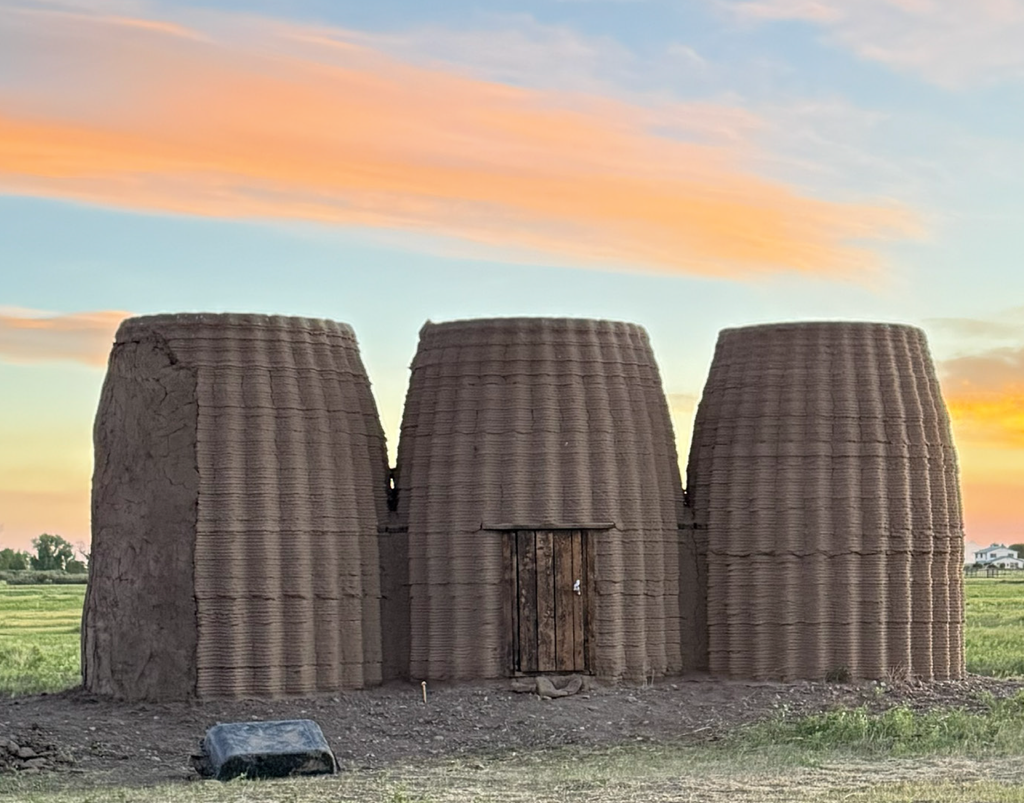
Casa Covida is an experimental house built in the high alpine desert of Colorado’s San Luis Valley, where adobe has been the traditional building material for centuries. Designed by Ronald Rael and Virginia San Fratello during the Covid pandemic, it combines robotic 3D printing with indigenous earth construction to explore new and ancient ways of living together. Every element is local – beetle kill pine, micaceous clay, river stones, wool woven by a regional weaver, aluminum cast from roadside cans.
Design
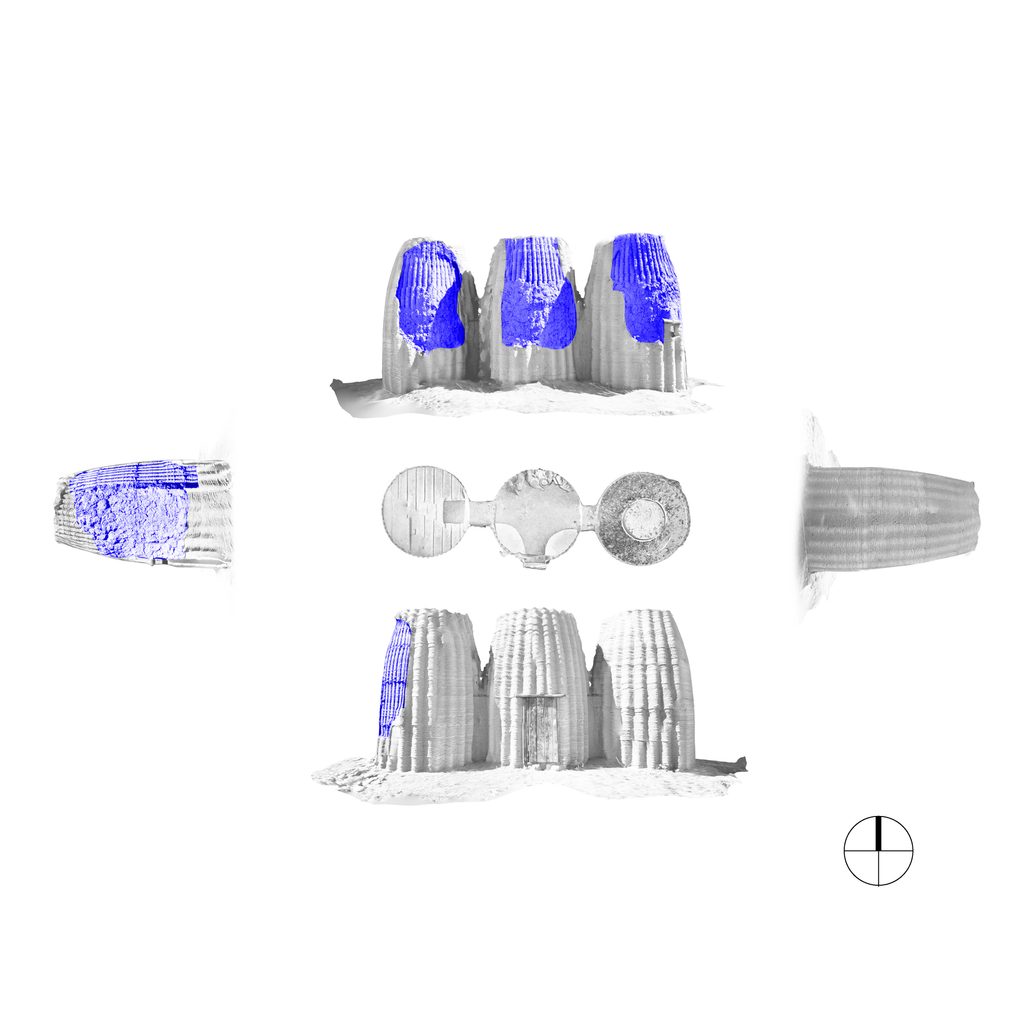
The plan is made of three circular spaces of equal diameter. Each rises into a conical volume open to the sky, separated from the next by thick earthen walls. The ornament is the printing itself, the horizontal texture left by the machine. The entrance is through the central volume (1), where life gathers around fire and food. On either side, two quieter spaces for a couple: one to sleep (2), one to bathe(3).
Erosion
The scan maps the erosion in blue. It is not evenly spread: each façade erodes according to its exposure.The west façade faces the prevailing winds and is worn by them. In the north façade during heavy rains, water stagnates on its surface and does not dry, slowly weakning the earth. The south façade, with its entrance, is almost intact; the east, protectd from wind and exposed to the morning sun, is untouched.
On the theses facades. Climate has nearly erased the horizontal texture of the printing and fallen the fragments. Erosion takes the pattern first: the trace of the machine disappears before the mass.
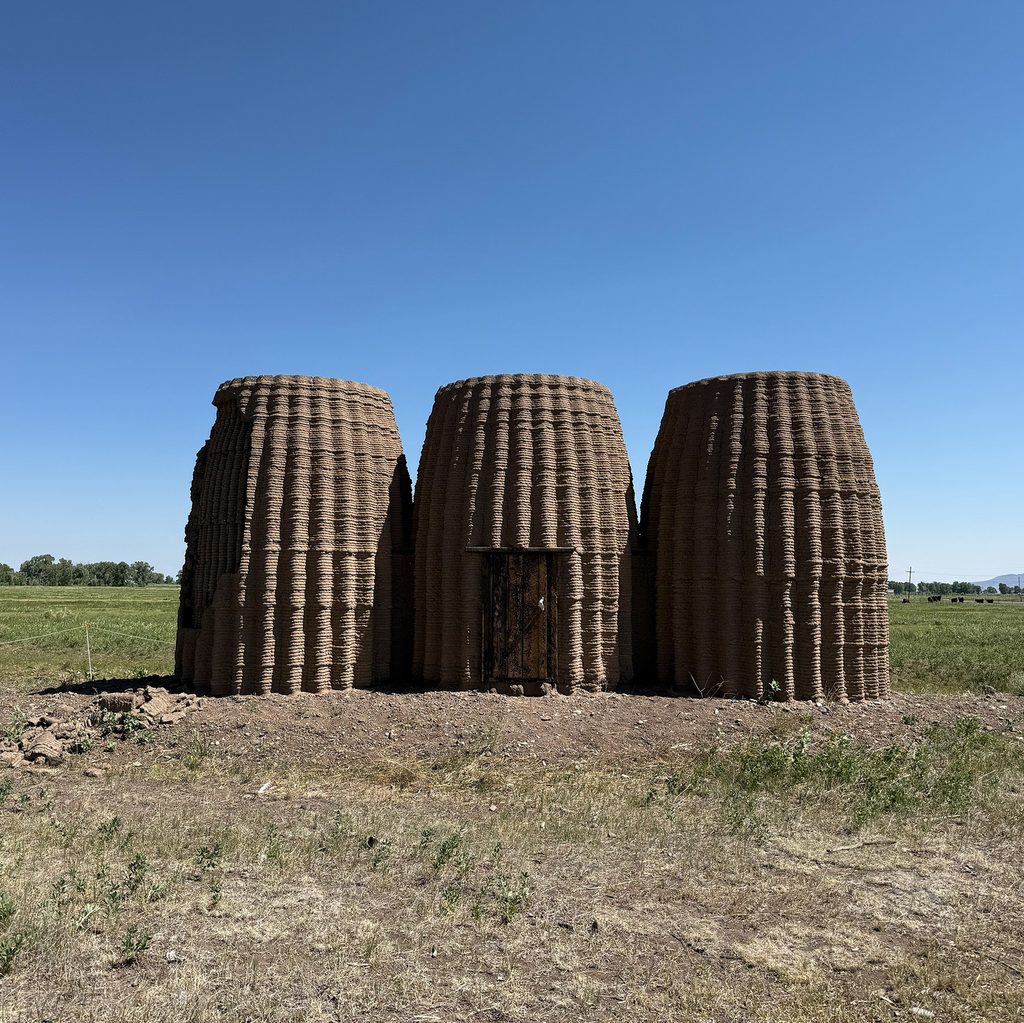
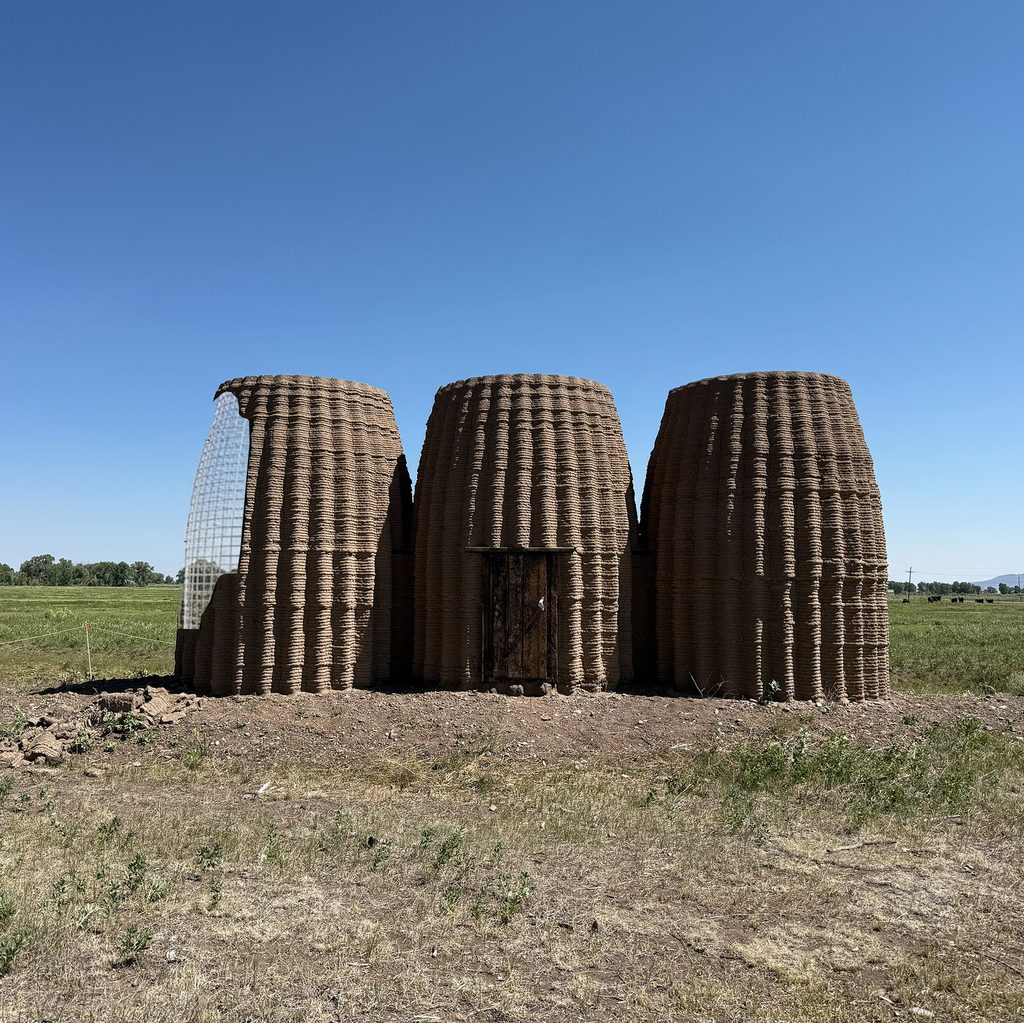
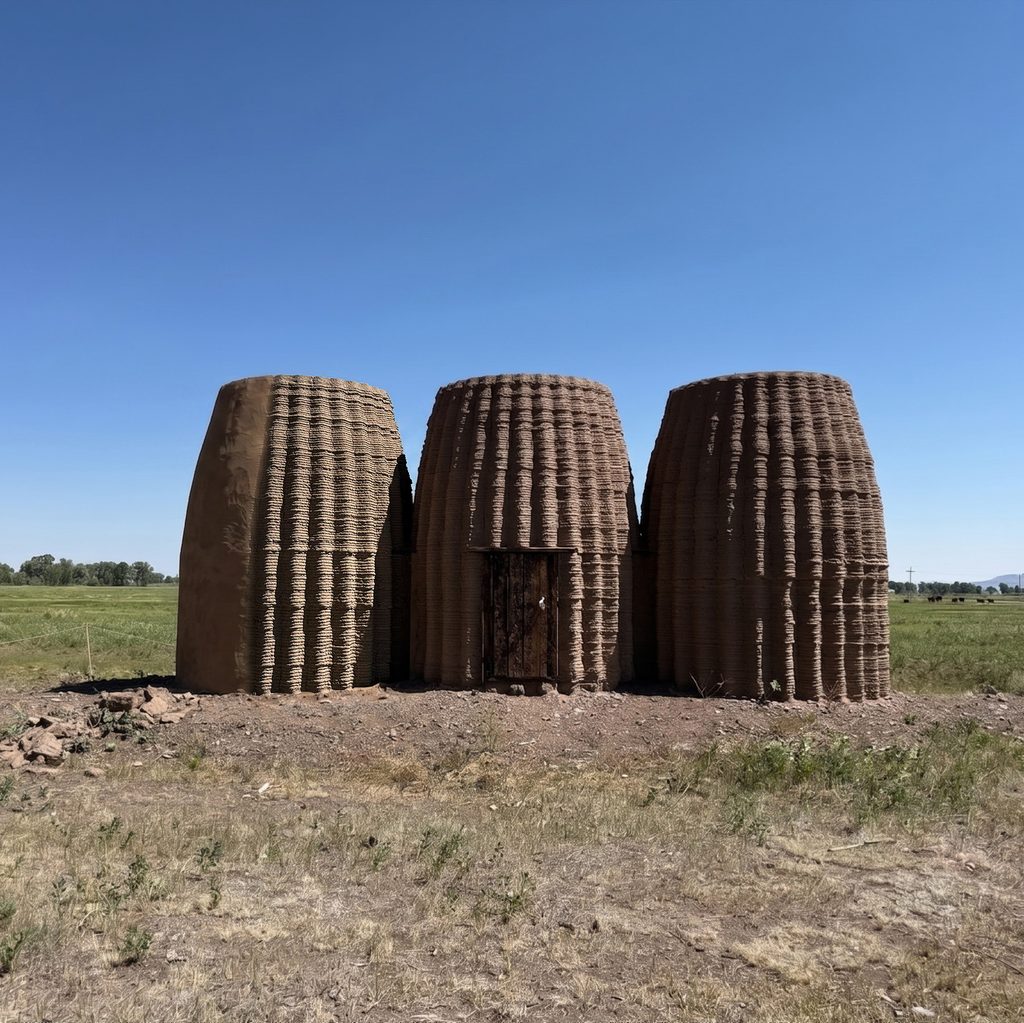
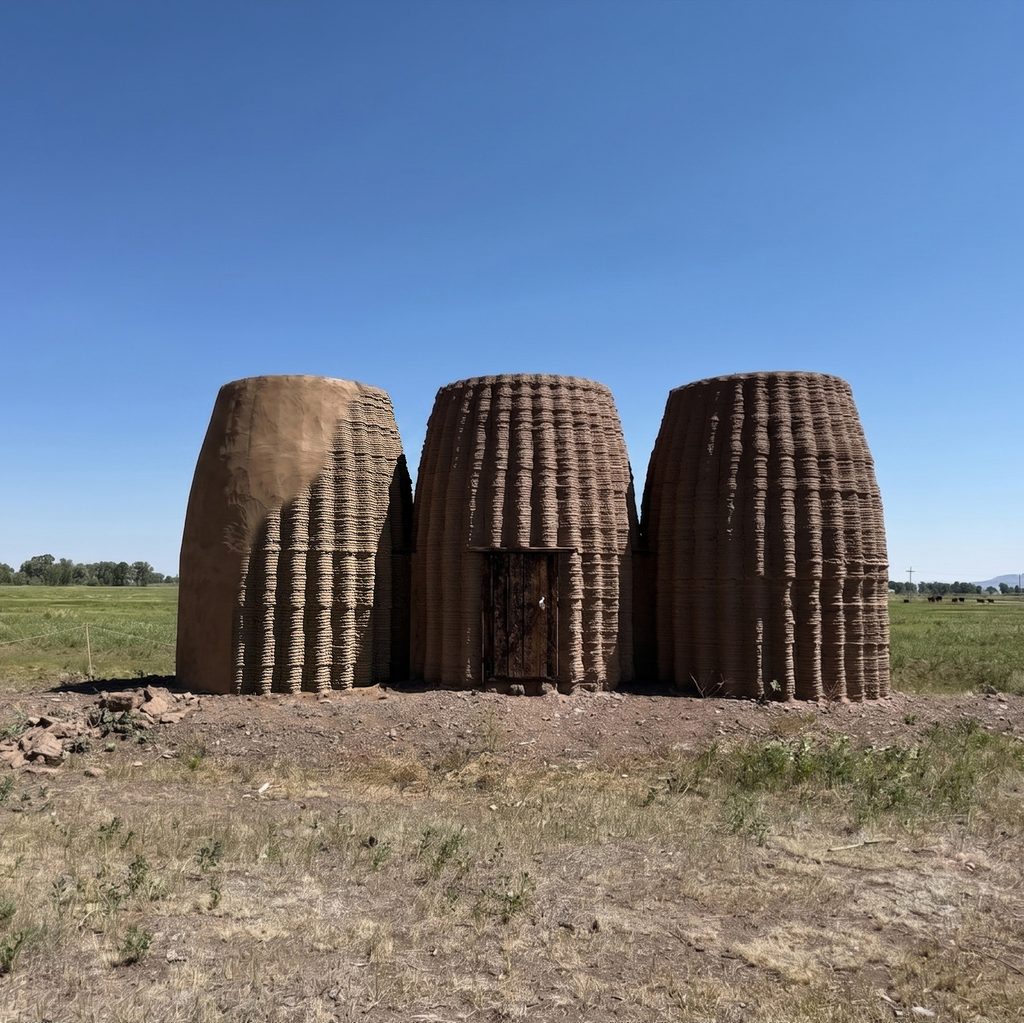
This conversation brought ideas for repair, what would be a partially plastered construction? A strict line or a more organic one? A whole within the building or a steel skeleton ?
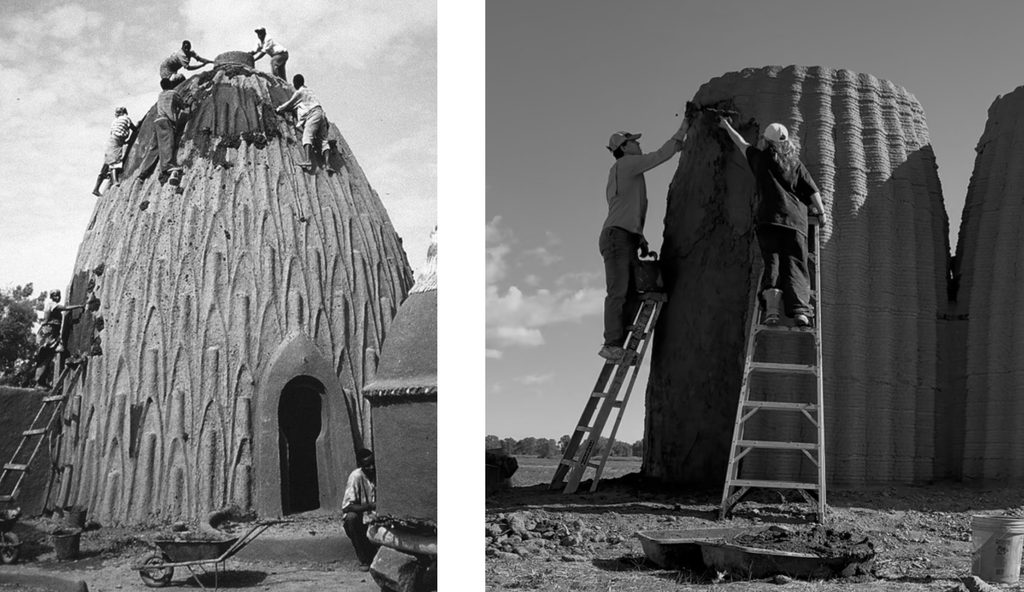
The act of repair
reminded me of the practice around and how climatic needs bring community around a building.
Me coming was more than just repairing, it was sharing meals around the Hornos, meeting a new landswcape and new friendship. A family.
This practice of repair brought way more than a research. Repair when is applied becomes community.
It brought a new gesture, different from the original, responds to what the erosion revealed. Applying mud to the wall, keeping a visible joint between what was and what has been added, it is left legible as a cut in time.
Extract
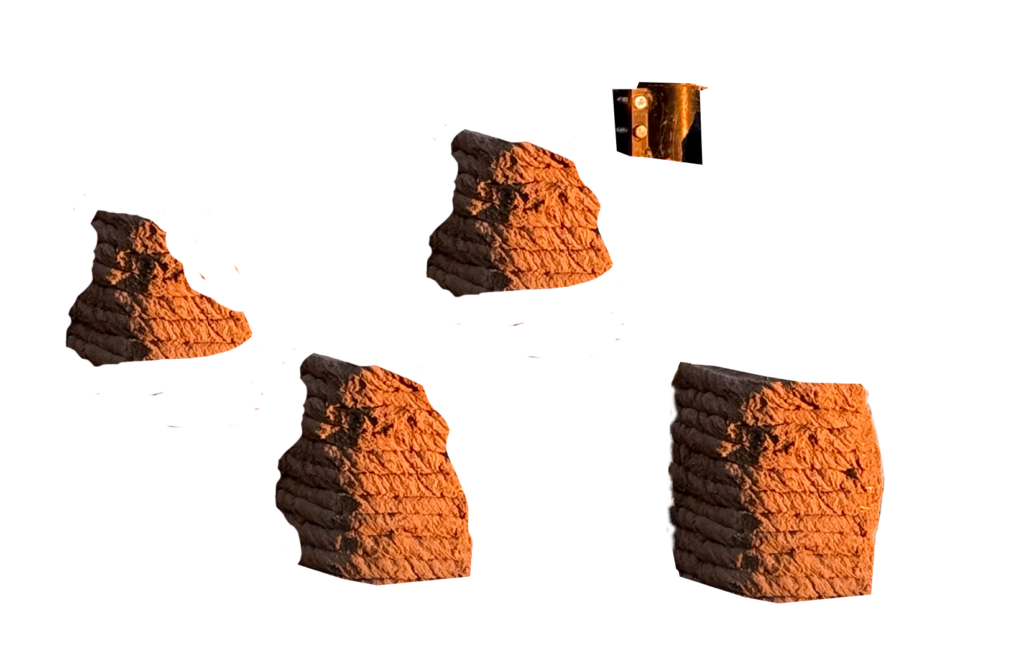
Extraction begins where erosion ends. At the foot of the north and west façades, the climate has left its harvest: fragments of printed earth fallen from the walls. Unlike the façade, they still carry the machine’s signature. The fallen fragments are collected, reordered, recomposed.
Assemble
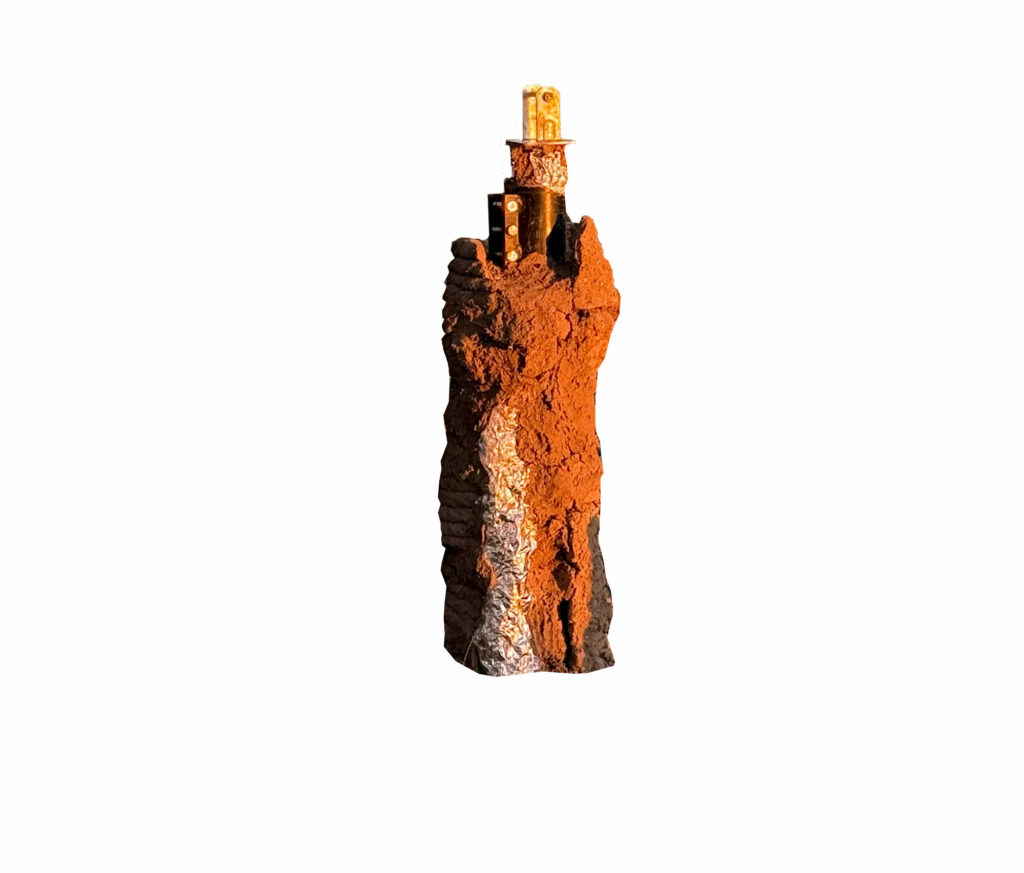
The fallen fragments are collected, reordered and recomposed into a new form: a column, NeoRuin II.
The machine printed the layers; the climate broke them; the hand stacks them again. The order is no longer the machine’s. Layers that once ran continuously around a wall now meet at angles, interrupted, superimposed, randomised. A strip of aluminium runs along its height, marking the joint between fragments.
The column now stands in the valley. The ruin becomes something else that carries its memory.
Credits
Casa Covida (2020) by Ronald Rael and Virginia San Fratello,
Rael San Fratello / Emerging Objects.
Text, drawings and Images by Sara Ayoub