An evolutive system
The Luz neighborhood located in Austin, Texas, showcases the use of 3D printing to shape a dynamic urban environment. Combining the capacity of 3D printing with a simple structural grid, this project establishes a system for crafting architecture that evolves over time—from a geometrical infill to a structural wall, then an adaptive house, and finally, an urban gathering.
Unit system
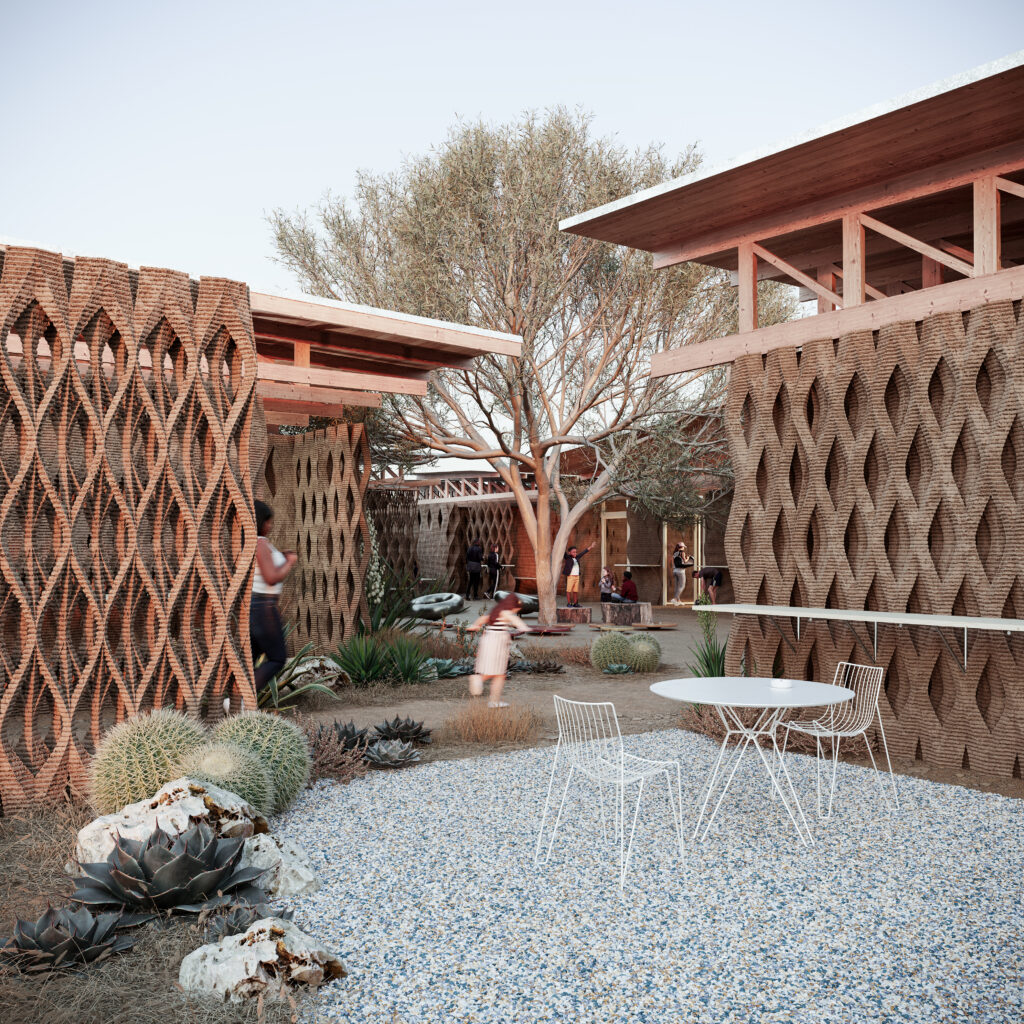
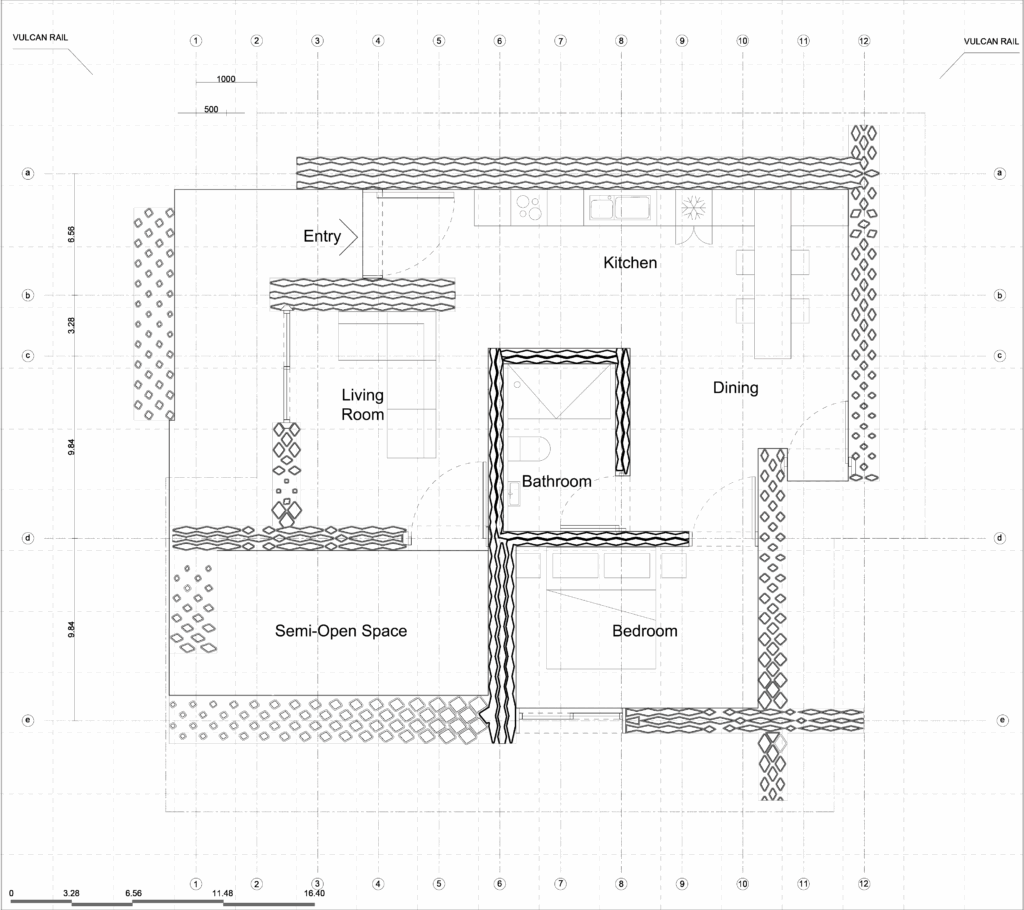
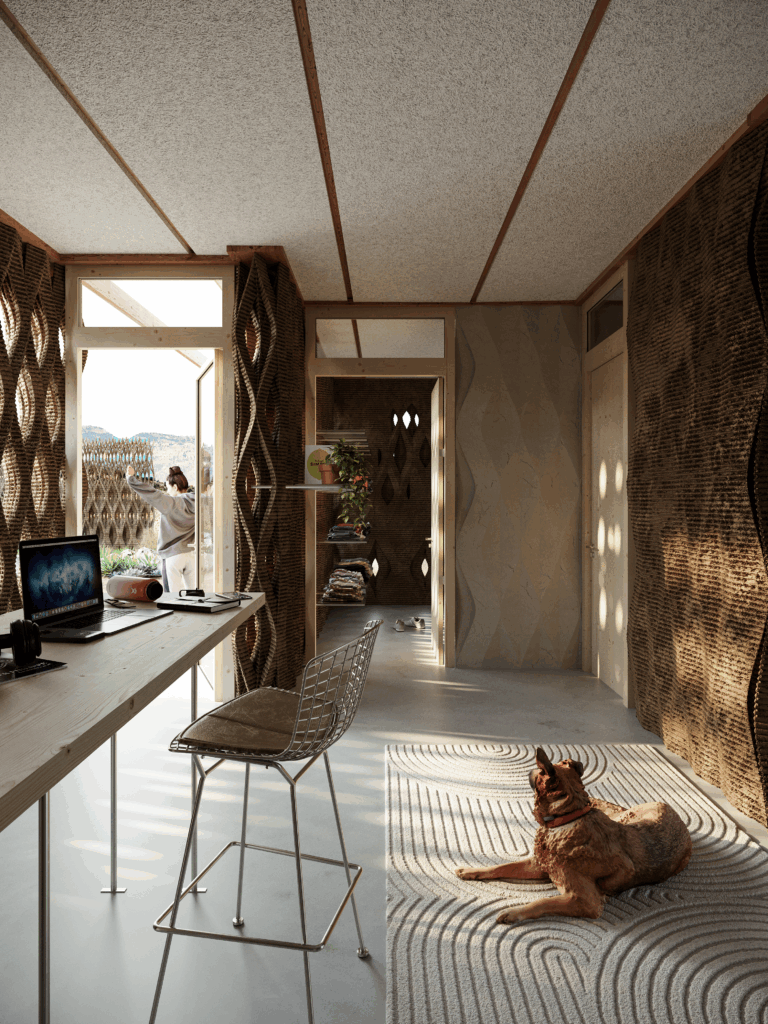
Consisting of four evolving houses that adapt to the needs of a diverse and multigenerational community, this project demonstrates that our habitat can expand in both size and functionality. The architectural innovation includes layered walls that can adapt its porosity to the different space’s requirements.The unit starts with a central core including bathrooms that feature non-porous walls for maximum privacy. The wall then transitions consistently to living spaces with varying levels of porosity, facilitating a subtle interplay of light and openness. The journey concludes in semi-outdoor spaces with high porosity, fostering an immersive connection with the surrounding environment.
Proliferation and printing system
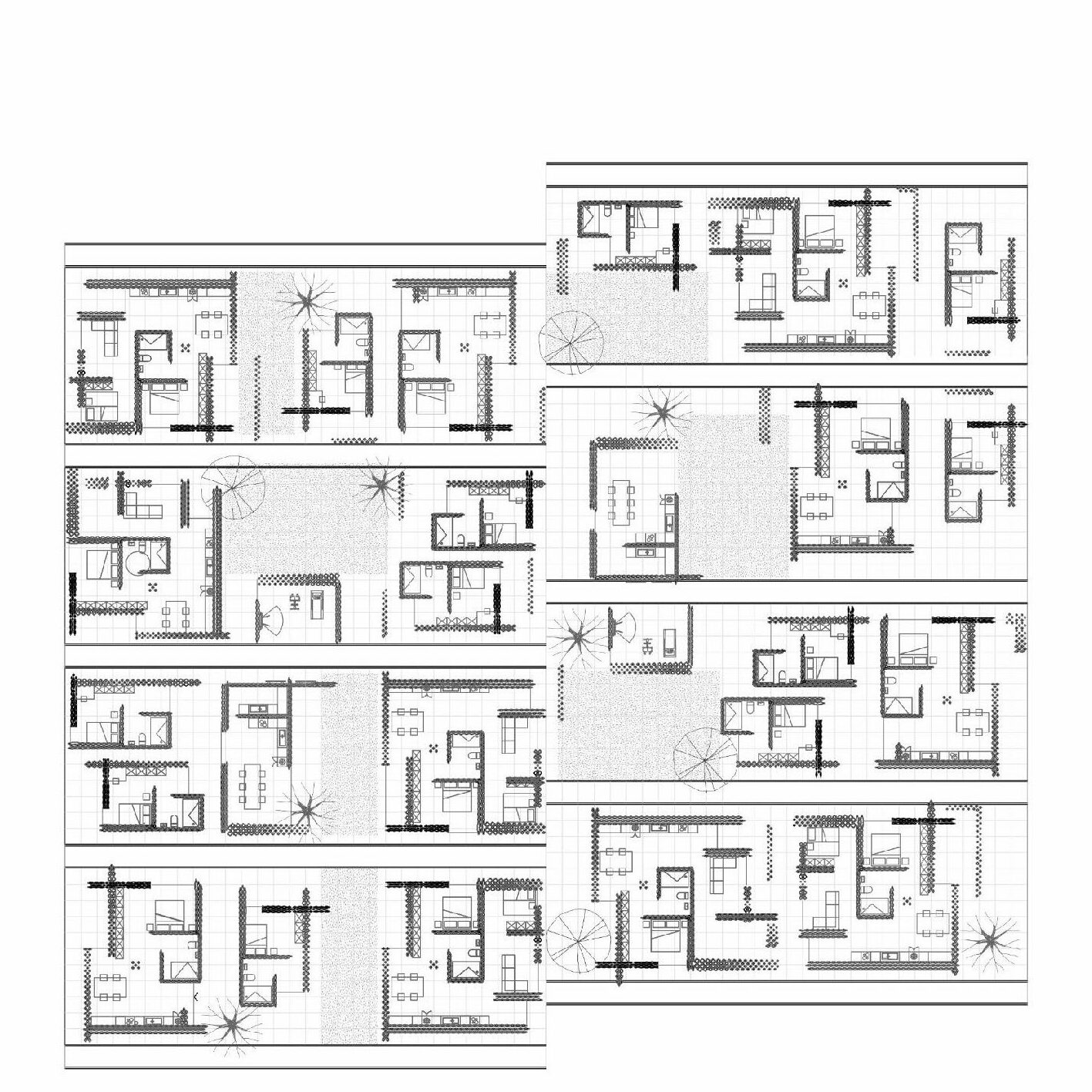
Utilizing ICON’s printing bed to define the urban plan, the units are printed with deliberate shifts, strategically breaking the continuity of the buildings. This design choice creates dynamic circulation pathways, ingeniously integrated through the printer rails. These pathways guide inhabitants to shared courtyards ,serving as climatic mediators, as well as to indoor shared spaces like community kitchens, gyms, and laundromats, fostering a sense of communal living.
Roofing system
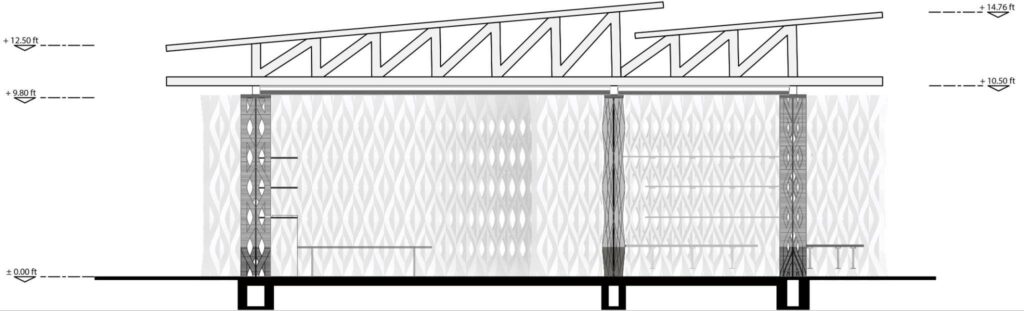
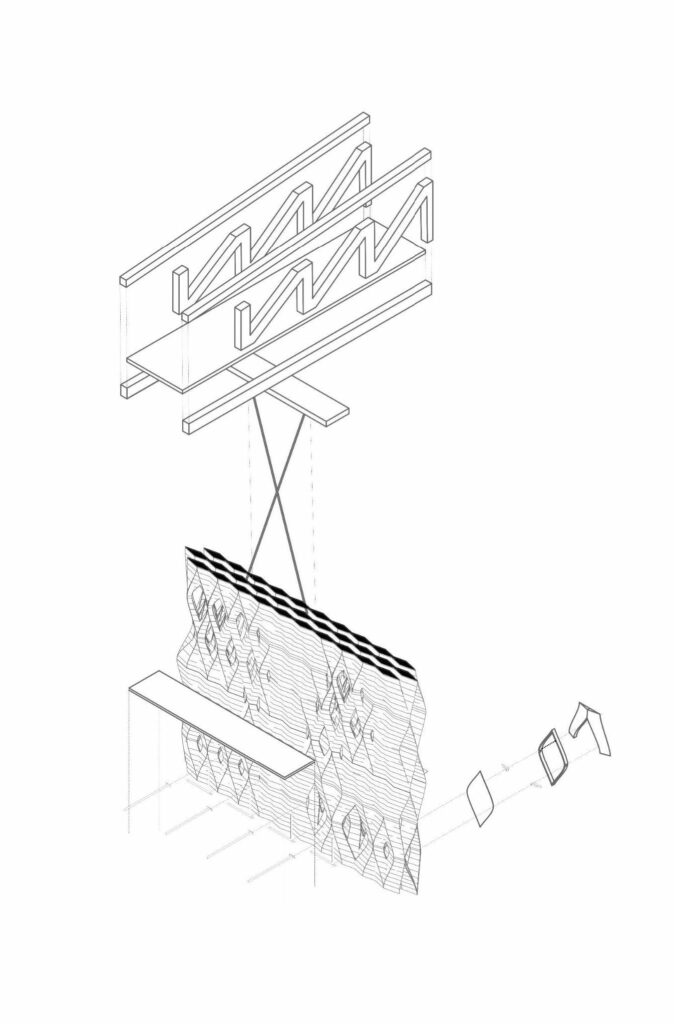
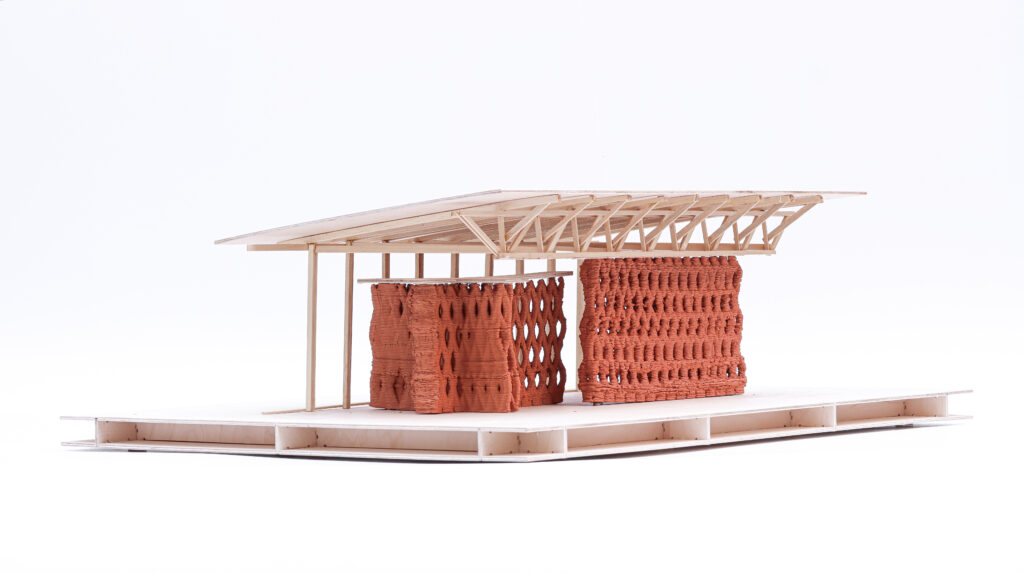
The roofing system serves as a climatic mediator in the housing complex. Wooden beams spaced at one-meter intervals connect inside and outside areas, supporting the roof. This simple system, integrated into each wall, allows homes to function independently and expand, while keeping the cost low.
The wall cavities
In Austin, the walls seamlessly adapt to climate, structure, and privacy.
The privacy is achieved by layering walls from opaque interiors to porous exteriors. For the climate, the south walls block direct summer sun and invite refreshing breezes through small bottom openings for natural ventilation, which then escape through the insulated north wall’s top openings. Meanwhile, the east and west walls are designed to welcome soft morning and evening sunlight while bearing the roof load.
Detail :
The wall cavities are designed to support other architectural elements, such a post-tensioning cable to hold the roof, metallic inserts to hold the wood furnitures and shelves as well as reservation to integrate the window frame and MEP after the walls are printed and cured.
Space usage and budgeting
To reduce further the cost of those affordable houses, the project proposes an optimized use of spaces aligned with Austin’s season.The project reduce to the minimum Indoor spaces used year-round, incur higher costs due to construction requirements) and instead increase semi-outdoor spaces (utilized only in spring and summer, are more budget-friendly) and external shared spaces (reserved for the warmest summer months, are the most economically efficient).
Credits
Design Team
Sara Ayoub, Marietta Kaltsa, Sakshi Pawar
Renders
Lamine Salla
Faculty
Edouard Cabay, Nestor Beuin
IAAC, 3dpa
Related publications